Keystone Intel Brief 2/16/2026
Welcome to the inaugural edition of the Keystone Intel Brief. Your weekly digest newsletter of the week’s most critical developments and stories in defense, national security, and aerospace, distilled to be the keystone of your situational awareness without the inbox clutter.
Need to Know Basis – Biggest Stories of the Week
Rubio delivers MAGA's foreign policy doctrine in Munich – Axios
At the 2026 Munich Security Conference, Secretary of State Marco Rubio took center stage to articulate the Trump Administration’s shift in foreign policy. With European allies wary of a growing policy rift, Rubio’s address focused on balancing continued partnership with a clear pivot toward the administration's new strategic priorities. He signaled that while the U.S. remains a committed partner, future engagement will increasingly prioritize the US homeland, the Americas, and the Indo-Pacific and require more robust burden-sharing from European allies.
Space Force, Aiming to Double in Size, Blows Past Recruiting Goal – Air and Space Forces Magazine
The United States Space Force, the Pentagon’s newest and smallest branch, is looking to increase its size the according to Chief Master Sergeant of the Space Force John Bentivegna at a Senate Armed Services Committee. The Space Force is looking to grow past its 10,000 uniformed guardians to around 20,000 personnel to meet the increasing mission and needs of the force. The Space Force also hit its recruiting goal by 125 percent with over 900 recruits expect to join after training.
SECNAV Phelan: FY 2027 Shipbuilding Budget Could be ‘More Than Double’ 2026 Ship Total – US Naval Institute
Speaking at the U.S. Naval Institute’s WEST 2026 conference, Secretary of the Navy John Phelan outlined expectations for a massive expansion in naval procurement. He stated that the number of ships authorized in the upcoming FY2027 budget is projected to double the 19 vessels funded in 2026. Key priorities – including the newly announced FF(X) frigate, the proposed Trump-class ‘battleship’, and unmanned systems – will constitute the core of this increased activity as the Navy and Pentagon move to revitalize the domestic maritime industrial base.
US military preparing for potentially weeks-long Iran operations – Reuters
U.S. officials are increasingly preparing for a sustained military campaign against the Islamic Republic of Iran as the United States continues to build up forces in the region, including the deployment of a second aircraft carrier. While the military postures for operations that could last weeks, the U.S. is simultaneously pursuing negotiations over Iran's nuclear program, dispatching envoys Steve Witkoff and Jared Kushner to Geneva to meet with Iranian officials.
President Trump has previously called for strikes on Iran’s nuclear and ballistic missile programs, citing both the proliferation threat and a deadly crackdown on dissidents by Iranian security forces earlier this year. The administration has also floated the possibility of a regime change mission, an objective that would require a significantly larger force than last year’s Operation Midnight Hammer,"= which focused strictly on striking Iranian nuclear facilities.
Pentagon wants counter-drone sensors to protect US infrastructure — and fast – Defense News
The Pentagon’s Defense Innovation Unit (DIU) is soliciting new sensors to detect small Unmanned Aircraft Systems that threaten defense installations and critical infrastructure. The DIU is looking to test these systems at Yuma Proving Ground by spring 2026. This move follows lessons learned from the war in Ukraine regarding the need for mobile, low-cost counter-drone sensors that can be deployed rapidly across the U.S. homeland.
Under the Radar – Stories you may have missed
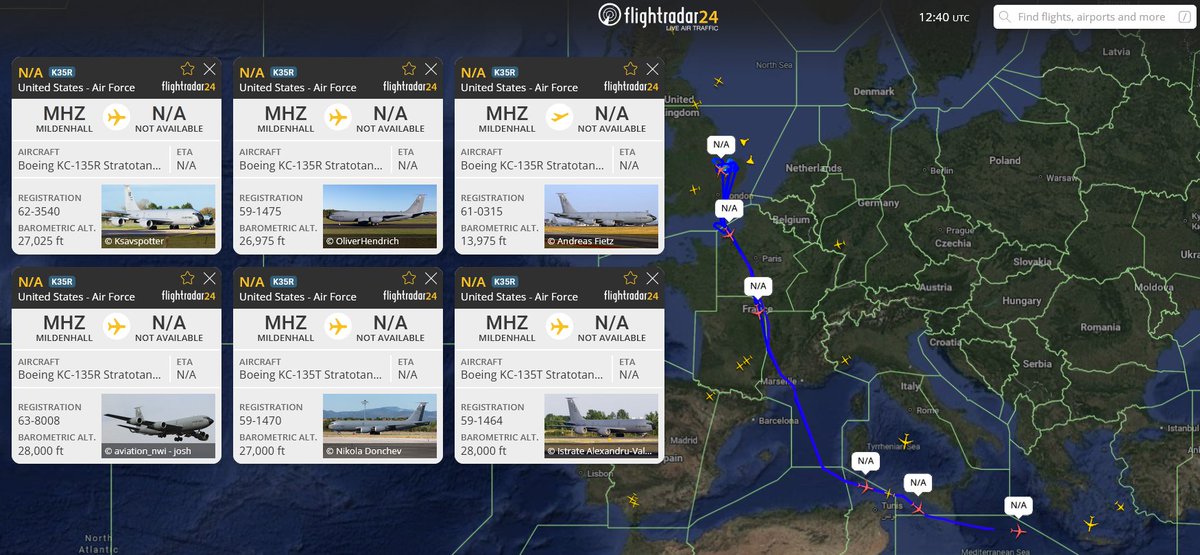
OSINT Analysts Track U.S. Airpower Surge to Europe and Middle East
Open-source intelligence (OSINT) analysts have documented a significant repositioning of U.S. airpower assets, including aerial refueling tankers and fighter squadrons, to theater locations in Europe and the Middle East. This buildup closely mirrors publicly tracked aircraft movements observed prior to last year’s airstrikes on Iran during Operation Midnight Hammer. While the unusual concentration of assets does not guarantee that military action is imminent, the staging of these critical "enablers" demonstrates that the Pentagon is actively preparing the infrastructure required for potential kinetic operations.
Strategic Assets – A look at analysis, reports, and policy we think is worth your time.
(Policy Paper) Strategic Attack: Maintaining the Air Force’s Capacity to Deny Enemy Sanctuaries – Mitchell Institute
As adversaries, like China, invest heavily in long-range "sanctuaries protected by advanced A2/AD umbrellas, the U.S. Air Force faces a deficit in its ability to conduct strategic attacks. The policy paper by the Mitchell Institute examines the requirement for a modern, stealth-dependent bomber fleet, able to penetrate these contested environments and hold high-value targets at risk.